Your business requires regular cleaning based upon potential hazards, operational volume, food allergen presence, and health inspections, plus documented records supporting HACCP compliance, regulatory audits, and public health standards. The information below describe essential sanitation program components.
Important Highlights
- Sanitation technicians from Brampton support restaurants, grocery departments, commissaries, warehouses, bakeries, schools, mobile vendors, and allergen-sensitive operations.
- Cross-contamination avoidance is accomplished by sanitizing high-touch surfaces, food-contact equipment, kitchens, floors, drains, restrooms, and storage areas with zone-based workflows.
- Qualified providers verify proper chemical concentration, compatibility, and contact time, then record completion with checks, reviews, and correction logs.
- Maintenance timelines need to respect hazard, throughput, switches, accidents, and requirements, with regular, regular, and seasonal duties allocated by location.
- Highlight vendors showing HACCP, sanitation competency, WHMIS training, protection, credentials, color-coded tools, and compliance-ready cleaning records.
What Brampton Operations Require Food Safety Cleaning?
Brampton facilities that manage, store, prepare, package, or offer food require food sanitation. Implement it if your business is covered by health reviews, food regulations, or HACCP protocols. The mandate covers dining establishments, employee cafes, food distributors, market sections, meat shops, fish counters, local shops, and commercial kitchens.
Compliant food safety cleaning is equally essential in storage warehouses, production plants, freezer facilities, bakeries, school nutrition services, reception halls, and meal delivery centers. Portable and seasonal operations count as well, including catering trucks, festival vendors, and pop-up food booths. Your location must have recorded sanitation procedures should your employees process ingredients, portion ready-to-eat items, reheat products, or store allergens. In Brampton, hygiene continues to be not elective; it represents legal, operational, and consumer protection compliance.
What Do Brampton Cleaning Professionals Handle?
You require experienced cleaning professionals who disinfect high-touch surfaces, kitchen spaces, floor areas, and bathrooms to ensure compliance with food safety and health standards. These areas are targeted because they carry the greatest contamination risk, falling hazards, and regulatory breaches.
When you understand what they clean, you can ensure your operation's cleaning procedures satisfy compliance and operational standards.
Critical High-Touch Surface Sanitizing
Managing high-touch surface cleaning is vital for Brampton sanitation specialists because contact points can spread harmful organisms and food particles throughout a location. You should establish a documented schedule for sanitizing door handles, push plates, switches, railings, shared equipment controls, POS terminals, and refrigerator pulls. Applying area assessment techniques, experts identify every commonly touched surface and set cleaning timing
sample analysis to validate disinfection effectiveness
Cooking Zones, Walking Surfaces, and Restroom Environments
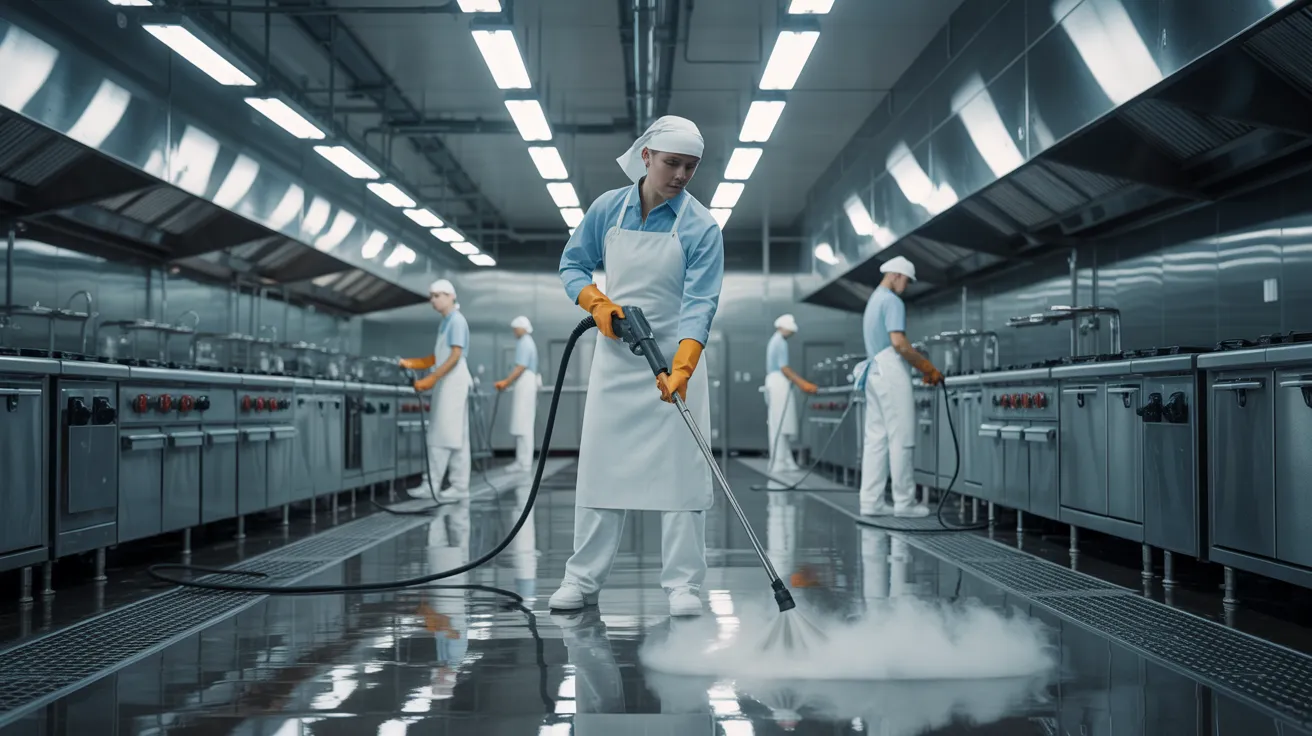
Brampton cleaning professionals will handle kitchens, floors, and restrooms since each space presents separate food safety concerns, slip-and-fall, and community health challenges. In industrial kitchens, you need degreasing on cook lines, equipment exteriors, drains, prep surfaces, and splash zones to reduce bacterial growth and pest activity.
Professional floor upkeep with documentation is also included. is also provided as part of the service.
Restroom sanitation involves disinfecting touchpoints, fixtures, partitions, dispensers, and waste containers, replenishing amenities and managing odor. They also service restaurant moprooms, where chemical storage, sink hygiene, and drainage conditions can affect sanitation compliance and staff safety daily.
Food Safety Cleaning Significance for Brampton Businesses
Brampton operations demand food-safe cleaning standards to fulfill compliance obligations and pass inspections. You also reduce cross-contamination by cleaning and sanitizing food-contact surfaces, equipment, and high-touch areas correctly. Most importantly, you help protect public health by lowering the risk of foodborne illness in your facility.
Regulatory Code Requirements
Since Brampton food companies must follow strict public health standards, your sanitation practices directly impacts your capability to fulfill health codes, protect diners, and eliminate regulatory penalties. You must maintain sanitary food-contact surfaces, verifiable cleaning logs, proper chemical use, and documented employee protocols that align with municipal and provincial inspection expectations.
Excellent cleaning standards promotes allergen control by decreasing residue on shared equipment plus regularly touched locations. If your cleaning standards weaken, you encounter notices, compliance orders, public perception damage, and service disruption risks during follow-up inspections or enforcement actions.
Cross-Contamination Avoidance
Meeting regulatory requirements also depends on your ability to prevent cross-contamination during routine food preparation and sanitation. You must keep raw items away from prepared dishes, clean work areas after each use, and keep cleaning products separate from food areas. Established guidelines minimize contamination chances and support consistent compliance during inspections.
You could implement allergen segregation to prevent priority allergens from contacting common areas, containers, or machinery. Apply separate boards, color-marked equipment, and strict utensil labeling so staff don't mix items during preparation or service. Enforce washing hands following uncooked meat, fish, egg products, or allergens. Change wiping cloths regularly, and test disinfectant concentration using strips. When employees learn these procedures each shift, you create a cleaner, safer operation that meets Brampton's food safety expectations every day.
Community Health Protection
If proper sanitation declines, you don't merely face potential inspection issues—you boost the probability of foodborne illness affecting customers, staff, and the broader Brampton area. You also undermine your responsibility in protecting public health, especially in high-traffic food premises where contamination can spread quickly through surfaces, equipment, and touchpoints.
You depend on cleaning procedures that remove soils, effectively sanitize, and ensure effectiveness. This involves maintaining exposure times, deploying approved disinfectants, maintaining records, and training employees to fulfill compliance standards. These initiatives promote disease prevention by reducing microbes before affecting food surfaces or hands. In Brampton, effective cleaning protects at-risk groups, curtails outbreak likelihood, and proves your diligence. When you adhere to proper protocols, you go beyond regulations—you substantially reduce risk and promote secure food service throughout the city.
In What Ways Does Cleaning Help Achieve Food Safety Compliance?
Upholding comprehensive cleaning schedules improves food safety compliance by lowering contamination exposure, controlling pathogen growth, and ensuring your facility complies with sanitation requirements under HACCP-based programs and public health regulations. You confirm that food-contact surfaces are visibly clean and microbiologically controlled, facilitating documented preventive controls and inspection readiness.
Proper cleaning procedures also enhance allergen control by clearing residues that can trigger undeclared allergen exposure.
How Ought You Schedule Commercial Cleaning Work?
food-contact areas, bathrooms, and high-contact areas
risk factors, production volumes, or regulatory standards change
Finding Quality Brampton Cleaning Experts: A Guide
Screen providers initially by their food hygiene standards—not budget alone. You need to verify that every company meets CFIA, public health, and HACCP-aligned expectations for your operation. Demand insurance verification, WHMIS compliance, training records, and management systems. Evaluate technician understanding of cross-contamination risks, chemical safety, and documented sanitation practices.
Additionally, you need to evaluate operational reliability and responsibility. Obtain references from Brampton food operations, then review service speed, corrective measures, and communication standards. Verify the company conducts supplier reviews and can deliver inspection-ready documentation when inspectors or external parties need proof. Verify equipment upkeep, colour-coded tools are applied correctly, and site-specific hazards are identified. A qualified provider protects compliance, product quality, and your brand reputation.
What details should a Food Safety Cleaning Plan contain?
Establish a documented program that clarifies every sanitation task, standard, and responsibility ahead of production commencement. You should specify cleaning intervals, permitted substances, dilution percentages, exposure times, instruments, and inspection methods for each sector, surface, and equipment. Add pre-operational inspections, corrective actions, and employee training requirements.
Your strategy should also address cross-contamination controls, waste handling, pest-prevention measures, and documented schedules for restrooms, drains, floors, and food-contact areas. Outline how you'll separate raw and ready-to-eat processes, facilitate ingredient tracking, and keep accurate allergen labeling through validated cleaning between product changes. You should assign accountability, keep signed records, and assess results against regulatory standards, HACCP controls, and customer requirements. When gaps appear, update procedures immediately and instruct staff.
Popular Asked Inquiries
Do sanitation providers work during overnight shifts at Brampton properties?
Yes, you can contract sanitation providers to manage nighttime operations in Brampton facilities. You'll manage overnight sanitation around operational windows, access requirements, and personnel requirements. Providers generally establish nightshift logistics to minimize interruption, maintain standards, and document finished tasks. You should verify response times, oversight, access procedures, and disposal methods before service starts.
Do Brampton cleaning experts offer hazard containment services?
Yes, you can find many Brampton sanitation experts offering emergency response options. They handle contamination, evaluate risks, contain affected areas, and execute rapid cleanup to minimize risk and prevent disruption. You should confirm timeframes, certifications, protocols, and disposal methods. If your facility needs compliance, pick a provider that documents incidents, follows procedures, and supports audits.
Are green disinfectants safe for food-handling equipment?
Yes, plant-based sanitizers can be safe for food-contact surfaces if you select disinfectants approved for food contact and satisfying regulatory requirements. You should validate contact duration, dilution rates, and rinse protocols before use. Many botanical formulations reduce chemical hazards, but you still need confirmation of performance against harmful bacteria. To preserve residue-free areas, you need to follow manufacturer instructions exactly and validate the disinfectant satisfies applicable food industry sanitation standards.
Will cleaning schedules accommodate seasonal production changes?
Certainly, sanitation programs adjust to production fluctuations well. Revise schedules, staffing, sanitizers, and validation steps to match with operational cycles while maintaining compliance standards. Limit equipment downtime by organizing sanitation during production shifts, maximum output, and usage patterns. Concurrently update written procedures, training, and environmental testing to reflect transient threats, novel allergens, or increased soiling. Periodic assessments preserve your program effective.
Do professional cleaning services educate employees on hygiene standards?
Indeed, commercial cleaning providers typically provide employee coaching on proper hygiene. Your staff receives instruction on proper chemical use, exposure durations, preventing cross-contamination, equipment breakdown, and record-keeping. They generally adhere to training with HACCP, GMP, and CFIA or local public health criteria. Many also learn the details execute sanitation audits to confirm standards, identify gaps, and strengthen improvement measures. This supports you in maintain consistent procedures, pass inspections, and reduce food safety risks each day.
Summary
Partnering with Brampton food safety and commercial cleaning professionals goes beyond tidying—it guarantees your operation meets inspection standards and your protocols remain compliant. From processing facilities to kitchens, each sanitized surface and organized section reduces health hazards and prevents major expenses. By arranging service on appropriate schedules and executing a comprehensive cleaning strategy, you protect staff, your customers, and your image. In a heavily regulated sector, sanitary conditions can't be overlooked—they're vital to proper management.